
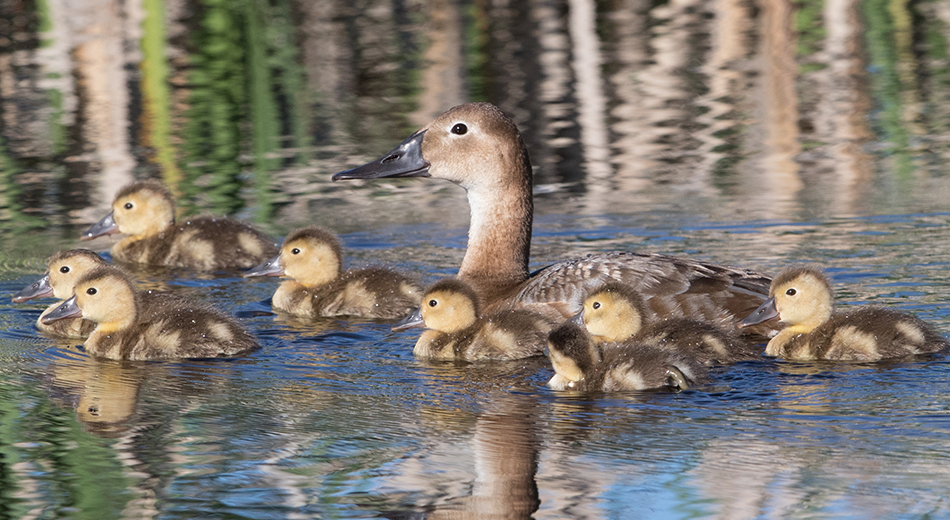
Prairie Habitat Conditions Show Improvement for Start of Duck Breeding Season
Nesting habitat in the Dakotas begins strong, with parts of the Canadian prairies starting out wetter than recent springs
BISMARCK, NORTH DAKOTA — It’s only May and things can change, but duck hunters have reason for optimism this fall. Wetland conditions across much of the prairie pothole region have improved over recent years thanks to consistent moisture in the Dakotas and spring storms bringing crucial precipitation to drought-stricken areas of Canada.
“We have the potential to have a pretty good duck production year, especially in the United States,” said Mike Buxton, waterfowl programs director at Delta. “And I think we could have good age ratios of juveniles to adults this fall.”
To build this assessment, Delta relies on dozens of Predator Management trappers and Hen House contractors who log countless hours afield across the prairies in the winter and spring. Additionally, Buxton gathers hydrologic and weather station data to compile into Delta’s Waterfowl Breeding Habitat Conditions Map. These information streams offer a snapshot of breeding waterfowl habitat conditions.
“I’d give the U.S. prairies a B-plus right now,” Buxton said at the beginning of May. “The lion’s share of the Dakotas was good and wet going into the fall — and there’s a lot of importance that people miss on the value of fall moisture. When it freezes, it locks that moisture in.”
Heavy, wet snow and rain in April kept North Dakota and much of South Dakota in strong shape, particularly around Devil’s Lake and the James River corridor. In the past two nesting seasons, returning ducks found dry conditions across much of the Dakotas, which forced many of the birds to settle elsewhere. This spring, the Dakotas had good sheet water and colder weather kept the snow line just north of the border, leading to good early nesting activity by mallards and pintails, while blue-winged teal, shovelers, and gadwalls have been steadily establishing nesting territories.
“Research has shown that duck production is typically better on the U.S. side of the border,” Buxton said. “So that snowline keeping ducks in the Dakotas this spring should be a positive development for duck production.”
On the Canadian prairies, overall habitat conditions are at a C, with pockets of quality B-plus habitat out there. “That’s a notable step up from the D-minus of recent years,” said Matt Chouinard, Delta waterfowl programs director. “For the past three years, it's been pretty common to say, ‘It's better than last year and showing gradual improvements.’ You can't expect it to go from a desert to the Garden of Eden over a single winter.”
Many of Manitoba’s wetlands remain in decent shape, having benefitted from multiple rounds of storms this spring. Although drought conditions persist across most of southern Saskatchewan, there have been marked improvements in the parklands and portions of eastern Saskatchewan.
“In Saskatchewan, we’ve seen some of the best April storms in a few years,” Chouinard said. “So hopefully more ducks settled in there to take advantage of the improved conditions.”
In east-central Alberta, prolonged drought conditions have been eased by precipitation this spring, including an April snowstorm that dumped up to 8 inches near Calgary.
The prairie pothole region, known as North America’s “Duck Factory,” produces up to 70% of the continent’s ducks each year. This crucial habitat contains millions of acres of small, shallow wetlands that nesting hens rely on for shelter, nutrition, and territorial spacing. When the prairies are wet, duck production soars.
Outside of the prairies, conditions are more variable. In the Atlantic Flyway, the Northeast U.S. and eastern Canada have good to average conditions, extending to the eastern Great Lakes. Shifting over to the Mississippi Flyway, conditions are stellar for many parts of the Upper Midwest. Southern Wisconsin recently received more than a dozen inches of rain and northern snowpack was good all winter.
Across much of the Central and Pacific flyways, low snowpack has been the constant theme of winter, especially in Washington, Oregon, and California. Lack of water in Klamath basin could impact duck production. Lake levels are also critically low in Nevada and Utah. In Alaska, above-average precipitation the past few months should help interior and coastal delta breeding areas.
A clearer picture won’t emerge until aerial surveys are completed in May by the U.S. Fish and Wildlife Service and Canadian Wildlife Service for the annual Waterfowl Breeding Population and Habitat Survey. The BPOP survey, which is typically published in September, provides the most accurate data on duck breeding population size and habitat and is used to set waterfowl hunting regulations.
As always, weather patterns can change. Buxton notes that the first 10 days of May have been warm, windy, and dry across the Dakotas. As a result, many of the temporary and seasonal wetlands so important for nesting ducks are drying up fast.
“In order to sustain the momentum we have now on the prairies, we need more rain this spring to keep water on the ground,” Buxton said. “If we get that, we should be in great shape heading into summer.”
Delta Waterfowl is The Duck Hunters OrganizationTM, a leading conservation group founded in 1911 that uses science-based solutions to produce ducks, conserve prairie wetlands, and ensure the future of waterfowl hunting in North America. Visit our website.
For more information, contact Mike Buxton or Matt Chouinard.