
Partnering for Public Land Hunters
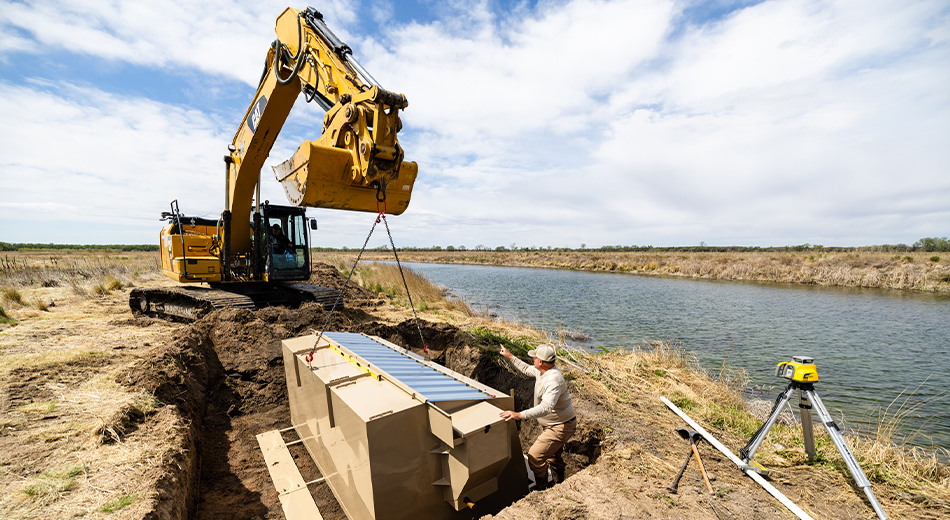
NORCO Chapter uses Waterfowl Heritage Fund dollars to help replace pit blinds on premier public land
This fall, two newly replaced heavy-duty steel pit blinds will be available to public land hunters on Elliott State Wildlife Area in northeastern Colorado, thanks to a partnership between Colorado Parks and Wildlife and Delta Waterfowl's NORCO Chapter. The project was brought to life through the chapter's Waterfowl Heritage Fund — a Delta program that allows local chapters to keep and direct a percentage of their net proceeds from their fundraising banquets toward local conservation projects and initiatives.
Located an hour and a half from Denver, Elliott State Wildlife Area is 1,543 acres, broken into four distinct tracts. The new blinds were replaced in the Union Tract, approximately 170 acres of managed and natural wetlands that is bisected by a natural spring-fed, warm-water slough. The previous two structures were concrete, wire-top pit blinds with rebar ladders and a 2-by-6 plank for seating. While they served the property and public land hunters well, they had been long identified as needing replacement but remained lower down the list of management priorities.
"When the infrastructure of the Union Tract was built, they installed two concrete pit wire-top duck blinds on the Union Slough, which was really ahead of its time to have permanent in-ground structure duck blind," said Joshua DeVries, wildlife technician and wildlife officer for CPW's Area 3.
Looking to put their WHF to use, the NORCO Chapter reached out looking for ways to help CPW with projects that would benefit hunters in their own local community, DeVries offered up this project that would improve access and opportunity on a premier piece of public land for waterfowl.
"The big thing is the opportunity — keeping it available for the future hunters," said Timothy Hoops, president of the NORCO Delta chapter. "It's expensive to get out. There are not very many opportunities for people to get into leases. Yeah, there are hunt clubs, but this fills a certain niche for people." The chapter purchased the blinds directly from the manufacturer, Kohler Blinds, which delivered and assisted CPW staff with the installation in early May, giving time for vegetation to grow back in before waterfowl seasons begin in mid-September.
Designated as a waterfowl refuge, the Union Tract is closed to the public outside of waterfowl seasons. During those seasons, hunters and other recreationists may access the parcel by reservation on Wednesdays, Saturdays, Sundays, and federal and state holidays. The wildlife area's three other tracts are open to hunters on a first-come, first-served basis.
"This area of northern Colorado is one of the last great frontiers of the state that hasn't been locked up in private leases and clubs, there's still huntable river for the public here," said DeVries.
DeVries manages an approximately 4,000-acre complex of wetlands and has
worked for CW for 14 years, including the past five in his current role. Although his management budget has remained stable — and in some cases improved — he said rising costs for supplies, diesel and other essentials have reduced the agency's purchasing power and limited what staff can accomplish. That reality, he added, makes partnerships with non-governmental organizations especially valuable.
"I think that partnerships like this are not only one of the most important relationships that we can have as a state agency, but also I don't think we could get the job done at the level that we're doing it without them," DeVries said. "We care about the public, we care about hunters, we care about the wildlife and habitat that's there, and were always trying to make it better." With that in common, moving forward the NORCO Chapter plans to continue growing their fundraising efforts to raise awareness for Delta Waterfowl, improve hunting for waterfowlers on Colorado's Front Range, and provide opportunity for the next generations of waterfowl hunters. — Christy Sweigart
This article originally ran in the Fall 2026 Issue of Delta Waterfowl magazine.