
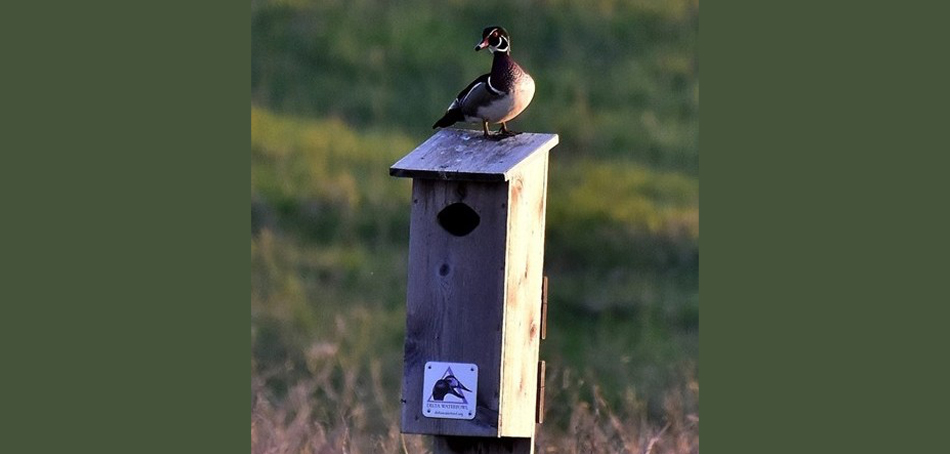
Boxes Increase Parasitism
Photo by Kevin Wright
Laying parasitic eggs is not a response to nest shortage, but a strategy to increase Darwinian fitness – the number of genes (kids) in the next generation.
Parasitism is common in ducks with nests that are easy to locate, and the search risk is low. My ranking of most parasitized nests:
#1) Nests in boxes – they are typically in open areas, which accentuates the parasitism common to natural cavities. Wood Ducks and Whistling Ducks parasitize more than other cavity nesters like Hooded Mergansers and Goldeneyes.
#2) Overwater nests (like Canvasbacks) that safely allow swim-in access to other Cans and Redheads. Late nesting Ruddy Ducks show less parasitism than early nesting Cans.
#3) Upland nests on small islands where it is safe (mammalian free) to search and there are higher densities of nests.
Colonial nesting waterfowl (many arctic geese) surprise me as parasitism rates are lower than expected given the density and conspicuousness of nests. The arctic imposes other constraints.
-Frank