
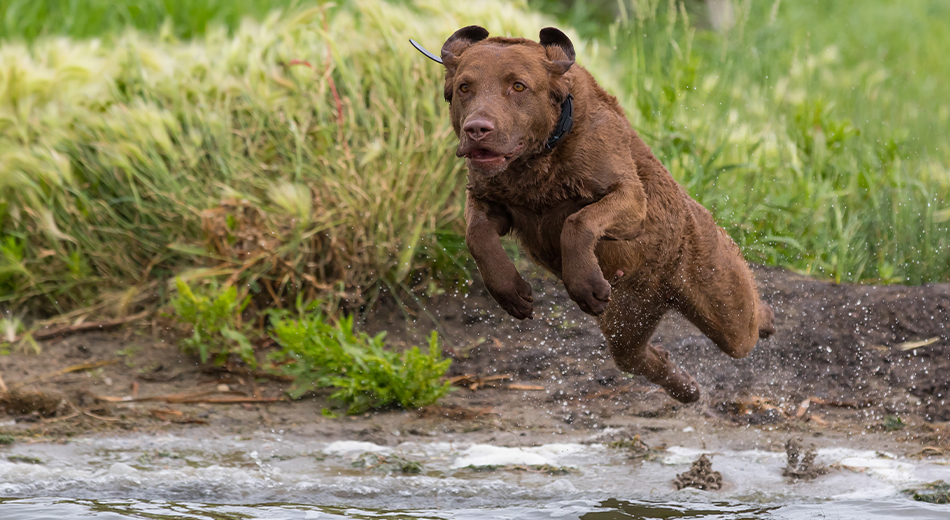
The Best of the Basics
Gear you really need to take your new puppy to a hard-driving ‘meat dog’
By Bill Miller
My new Labrador retriever puppy just turned 8 months old. The back seat and bed of my truck look like the last week of duck season. Do I really need all this gear to train one dog to fetch a few ducks?
While I was working up the fortitude to sort through all that gear, Delta Waterfowl’s new editor gave me an interesting assignment. He wanted me to cut through the clutter and come up with the bare-bones basics; the gear you truly need to train a “meat dog.”
Regular readers of this column may recall our tribute to the meat dog. The two main requirements are simple: The dog finds downed birds, even if the process isn’t always pretty, and the dog is a pleasure to hunt with, even if it has a few lovable quirks.
The top requirement for any duck dog is steadiness — sitting or lying at an assigned spot until told to retrieve. Steadiness is a major safety issue for dogs and hunters. A steady, focused dog also finds more birds.
The other key requirement is a close second: being quiet. No whining.
The List
Many generations of dogs — meat dogs and field champions alike — were trained before remote controls, batteries, or plastic even existed. If you want proof, find a working sheepdog exhibition near you. Those handlers shape remarkable dogs using only voice commands, a whistle, some rope, and hand signals. That said, training a reliable duck dog doesn’t require much gear.
My must-haves include:
• Kennel/crate
• 6-foot slip lead
• Dummies
• Place board
• Whistle
• Flat collar
• Chain slip collar
• 30-foot check cord
That’s eight items you need to go out and buy. I’ll share what I like and don’t like about each. But first, let’s talk about the one thing you can’t buy.
Buying Time
Impatience hinders performance in many areas of life, especially in sports. Olympic athletes don’t reach the podium without thousands of hours of practice (and failure). It doesn’t happen overnight — not even for gifted, natural athletes. It takes time.
Achieving performance from your retriever is no different. If you researched and chose a well-bred puppy, the retrieving instinct is already there. Your job is to refine it.
The saying goes, “You can’t buy time.” But when training a duck dog, that’s not entirely true. Hiring a professional trainer means paying for that person’s time instead of your own. You still need patience, though.
Every dog is different. They learn at their own pace. If a trainer tells you a certain skill takes exactly “X” number of weeks or days, find a different trainer. Whether you or a pro is doing the training, it takes as long as it takes. A pro may be faster because of experience with more dogs, but the timeline is still dependent on the dog.
Whether you’re doing the work yourself or writing checks for it, patience is one of the most important training tools you’ll ever use.
On to the gear.
Kennel or Crate
The world would be a better place if every dog were crate-trained.
Portable kennels have come a long way. Old wire crates scraped and squeaked with every wag of a tail. Screw-together plastic crates were an improvement, but not much. Today, rotomolded kennels — single- or double-walled — make it easy to give your dog a safe, comfortable home away from home.
But beyond safe transport, the kennel teaches restraint, self-control, and calm. The dog needs to see its crate as a safe place — whether that’s beside your desk or in the cargo hold of an airplane. Start crate training the day you bring your puppy home; the best-case scenario is that the breeder has already started it before then.
Slip Lead
A slip lead is a length of rope with a steel ring on one end and a hand loop on the other. Thread the rope through the ring to form a collar, slip it over the dog’s head, and you have a leash.
Simple as it sounds, the slip lead is a foundational training tool. A good one has a rubber or leather slide that stays where you put it on the rope. When positioned correctly, the collar sits at the top of the neck, right behind the ears. As Gerald Cook of Faith and Field Retrievers puts it, “The slide sits in the notch right behind the dog’s ‘thinking bone.’” When the lead is taut, a quick tug sends a clear, immediate correction signal.
Dummies
The options for retrieval dummies are endless. Most of them make sense and work well. But if I had my pick, I’d stick with canvas boat bumpers in puppy and adult sizes, filled with natural material.
The best example of such simplicity is the Retriever Training Supplies Firehose Dummy. It floats high and visibly, comes in a variety of colors, and is nearly indestructible. If your dog somehow chews one open, it’s filled with cork — nothing toxic to worry about.
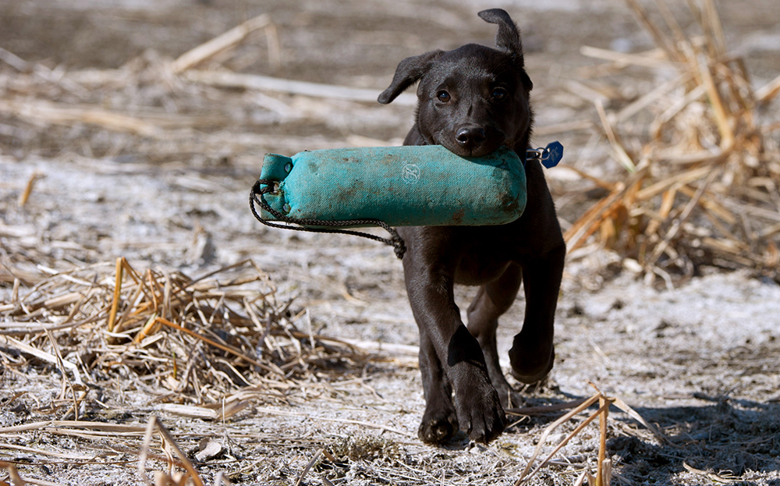
Dummy brands, designs, colors, and shapes vary widely. But remember: Many great dogs were trained with canvas bumpers and a lot of real birds.
Place Boards
My new pup, Shaylee, is the first dog I’ve trained from the start with a place board, though I’ve owned started dogs that were trained with them. Even in just a few months, the advantage is clear. The place board gives the dog a “target.” It builds confidence and a sense of security.
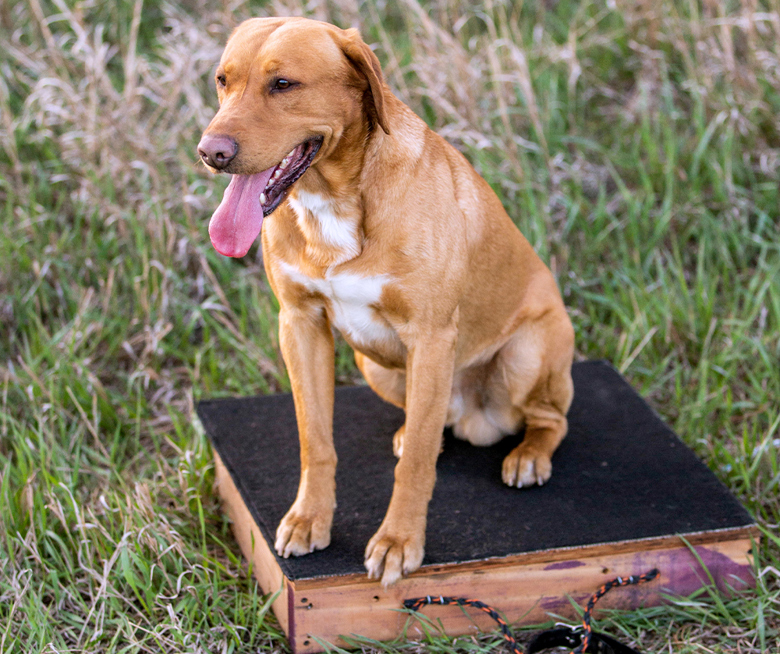
A place board can be as basic as a carpet sample or as purpose-built as a commercial tower. I built mine from 2-by-4s, plywood, and a rubber-backed carpet runner. Many pros rely on the Cato Board as the standard. MoMarsh makes stands that work in training, at home, and in the field. Their Final Stand and the Home Cot Breeze are sturdy, portable, and — in the case of the Final Stand — offer the advantage of elevation in cover or above water.
Whistles
The American standard in retriever training has long been a plastic police or coach’s whistle. My old lanyard even holds one with a megaphone cone for added volume at distance. But since my new pup is of Irish lineage, I decided to go old school. We’re using a pea-less Acme whistle that will never freeze up, no matter how cold it gets.
Article originally published in Delta Waterfowl's 2026 Hunt Annual magazine.
Join Delta Waterfowl to receive our member-exclusive magazine and eNewsletter—packed with the latest in duck research, expert tips on duck dogs, hunting insights, conservation updates, and more.
Your membership helps you stay informed while supporting the future of waterfowling. Join now: Become A Member.