
Wisconsin Volunteers Place Hen Houses in Winnebago Waters
The Wolf River Chapter is combining science with local knowledge to make more mallards
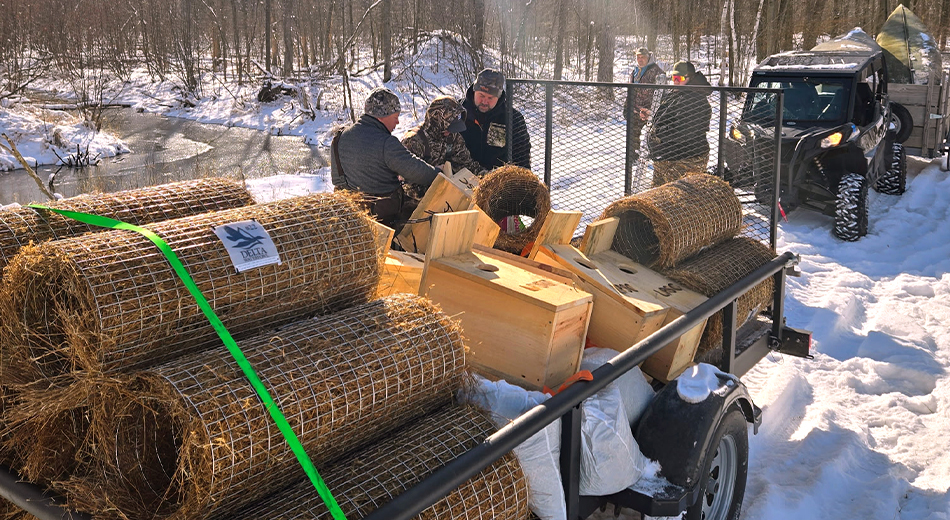
More than 45 cylindrical nesting structures now line the shores of Lake Poygan and the greater Wolf River area, offering mallard hens safe havens from predators during the critical spring nesting season.
The Wolf River Chapter of Delta Waterfowl has spent the past two years installing these Hen Houses along the 14,000-acre shallow lake northeast of Oshkosh, Wisconsin. By elevating nests above water and out of reach of mammalian predators — including raccoons, skunks, foxes, and coyotes — the structures have proven remarkably effective. In fact, Delta Waterfowl research shows that Hen Houses consistently boost nest success rates to 60% and sometimes as high as 80% or more, dramatically improving the odds that more ducks join the fall flight each year.
“Giving back to this lake community that we are all very familiar with is close to home for us,” said Alex Harp, chapter chairman for the Wolf River Chapter. “We know that the birds are in there already, we’re just seeing what we can do to increase some of those nesting successes.”
Lake Poygan sits within the Fox-Wolf River watershed, part of the historic Winnebago system that was transformed when the Fox River was dammed as part of a dead-end plan to create a direct commercial shipping route to the Mississippi River. As one of Wisconsin’s largest inland lakes, it offers excellent waterfowl habitat and a dedicated conservation community.
The Lake Poygan Sportsman’s Club has been an outstanding partner, helping on Hen House maintenance days, deploying wood duck boxes, and collaborating on larger habitat projects. The club has worked with the Army Corps of Engineers and Winnebago County on a multi-million-dollar breakwall project that preserves critical duck habitat. The Wolf River Chapter strategically installs nesting structures behind these breakwalls, complementing the broader conservation infrastructure.
“Delta has provided us this network of connectivity between some of these other conservation groups,” Harp said. “Knowing we have some funding that we can spend every year from our banquet, we’re partnering with the right groups to really enact some change within our local and immediate community. Getting together with multiple organizations and building those support systems has been huge for us to be as effective as possible with our dollars.”
The chapter pays for projects through their Waterfowl Heritage Fund, which allows Delta’s fundraising chapters to direct a portion of the money they raise toward local conservation and hunter recruitment projects.
Each year, volunteers gather for a maintenance day, riding four-wheelers and UTVs around the lake to check and repair structures. As the chapter continues fundraising through their local banquets — with their fourth annual event scheduled for April 2026 — plans include adding more Hen Houses to the landscape, hosting a youth trapping seminar with partner organizations, and further expanding their conservation impact in the area.
“It’s fantastic to see the chapter embracing Delta’s mission to help produce ducks in their local areas,” said Taylor Pahl, Delta’s regional director for Wisconsin. “There are so many great volunteers involved with the chapter. I can’t thank them enough for the time they dedicate to Delta each year, and I want to congratulate them on all they have accomplished thus far. I look forward to seeing what they achieve in the future.”
The Wolf River Chapter will maintenance their structures again following the spring nesting season, checking on nesting activity and usage, and continuing to refine their process in order to make more ducks. — Christy Sweigart