
U.S. Waterfowl Breeding Conditions Primed for Spring
Western Canada remains in a prolonged drought, but there’s still time for more precipitation on the Prairie
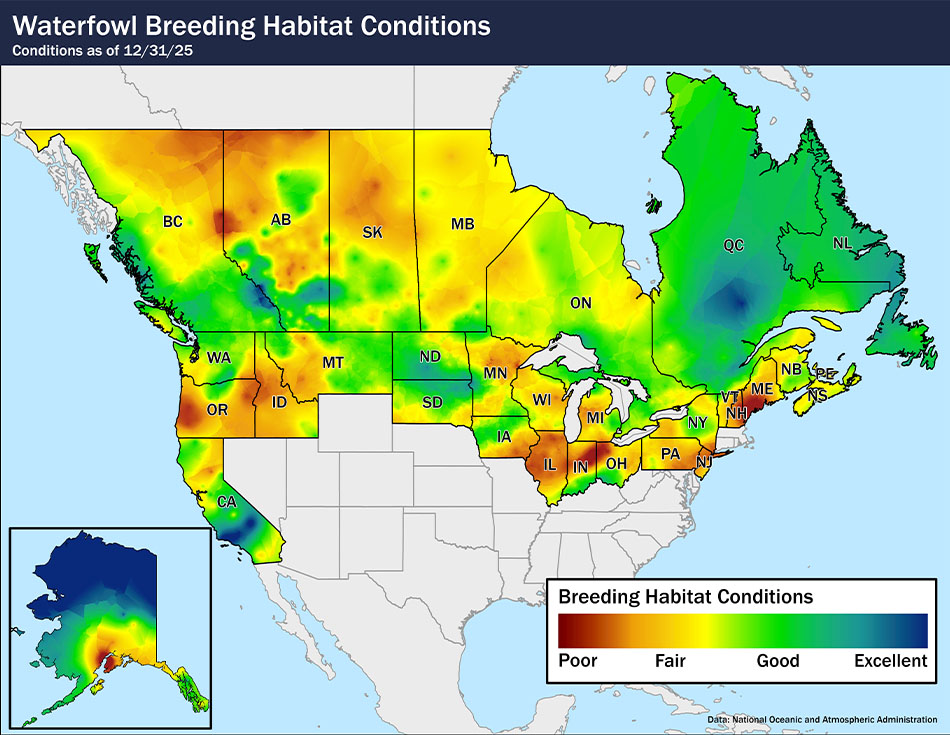
With only three months until the ducks return to their breeding grounds en masse, large swaths of the Prairie Pothole Region in the Dakotas are experiencing good to excellent habitat conditions.
North Dakota went into winter in good shape. Though there has not been a normal amount of snowfall, sustained rain events have occurred, and much of the state has received average precipitation over the last three months.
“If I look out the front window of my house, I can see the grass, which isn’t normal for January in North Dakota,” said Mike Buxton, Delta’s waterfowl program director. “But it has rained here quite a bit, and if that continues, we should be in good shape for the spring.”
Much of South Dakota was dry this time last year, but summer rains have many areas trending in the right direction as the breeding season draws near.
In Canada, southwest Manitoba is in good condition thanks to average precipitation over the last three to six months. The region received some recent snow as well.
Saskatchewan has been mired in drought for the better part of a decade. The province has a significant hole to dig out of, but conditions are improving near Saskatoon. Alberta is experiencing a mix of dry and wet conditions.
“This recent report was from the end of December, and a lot can change on the prairie in 15 days,” Buxton said. “We have had some strange weather on the prairie the past few years. Hopefully, the Dakotas will stay wet, and the provinces get some heavy snow or rain before April.”
Delta Waterfowl is The Duck Hunters OrganizationTM, a leading conservation group founded in 1911 that uses science-based solutions to produce ducks, conserve prairie wetlands, and secure the future of waterfowl hunting in North America. Visit deltawaterfowl.org.
For more information, contact Mike Buxton at mbuxton@deltawaterfowl.org.