
Delta Waterfowl University Hunting Program Expands Impact Across North America
Delivered at a record 146 higher-learning institutions, UHP introduces future wildlife managers to the value of hunting as a conservation tool
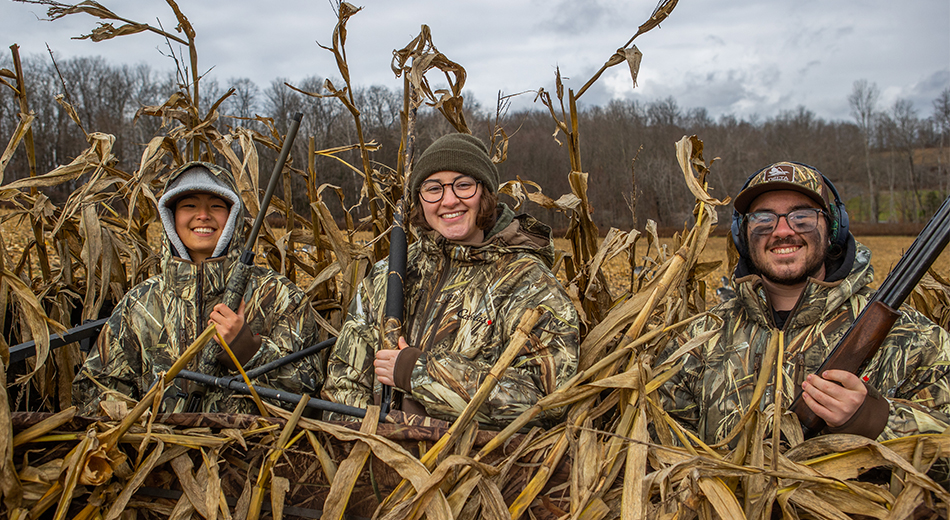
BISMARCK, NORTH DAKOTA — Delta Waterfowl’s University Hunting Program reached its largest footprint yet during the 2025-2026 season, expanding to 146 institutions across 44 states and all 10 Canadian provinces and the Yukon Territory while introducing 876 future wildlife managers to duck hunting.
Delta’s UHP is open to students seeking a degree in wildlife management or biology who have had little to no prior experience with hunting. Trends show that fewer wildlife management students today come from hunting backgrounds. Delta launched UHP in 2017 with four participating colleges and universities as a practical solution to ensure these students experience hunting firsthand and understand its role in sound wildlife management.
“The growth we've seen — six students per institution this season compared to 5.2 last year — tells me the demand for the program is increasing among aspiring wildlife managers,” said Stephen Sowell, Delta’s R3 program manager.
Participating students receive instruction as part of a regularly scheduled wildlife college course, often earning credit for the successful completion of the program’s core components. The UHP experience begins with a hunter education course covering safety fundamentals, waterfowl identification, and hunter ethics and strategies, followed by a shooting range day to familiarize students with firearms. During a mentored hunt, students harvest waterfowl, and then clean and cook the birds.
“I’ve spent a lot of time in the duck blind with UHP students, and their reactions to this powerful experience still amaze me,” Sowell said. “I have witnessed a transformation in students who truly begin to appreciate hunting.”
UHP's growth depends on the support of donors, agency partners, chapter volunteers, and educational institutions across the continent. In Alabama, the number of participants more than doubled, made possible through partnerships with Alabama wildlife officials and mentors from three local chapters. In Pennsylvania, participation nearly tripled, as mentors from six Delta chapters supported UHP events.
Looking ahead, Delta’s programmatic goals include continuing to form partnerships at colleges and universities across North America to deliver UHP to the more than 540 institutions that offer degrees in wildlife management or related fields.
“The full circle experience at the core of UHP ensures our future wildlife professionals understand the system that funds the resources they'll spend their careers managing,” said Joel Brice, Delta’s chief conservation officer. “That connection is central to Delta's mission to secure the future of waterfowl hunting in North America.”
Delta Waterfowl is The Duck Hunters Organization, a leading conservation group founded in 1911 that uses science-based solutions to produce ducks, conserve prairie wetlands, and secure the future of waterfowl hunting in North America. Visit deltawaterfowl.org.
For more information, contact Stephen Sowell at ssowell@deltawaterfowl.org.